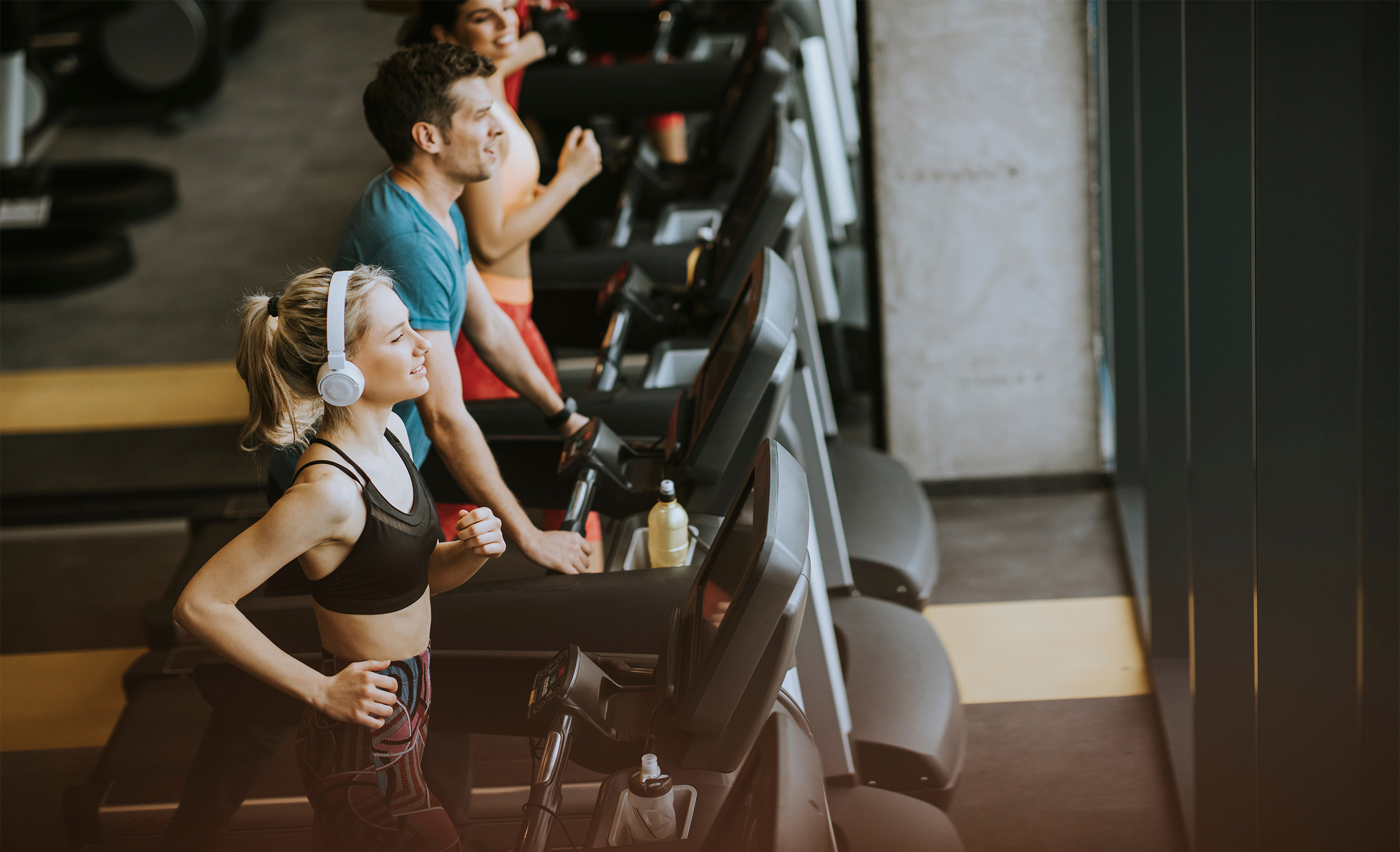
The flexible office market isn’t just growing. It’s about to nearly triple. And increasingly, the feature deciding which provider wins a company’s business isn’t the coffee bar or the ergonomic chairs. It’s the gym.
New research highlighted by JLL shows that coworking and flex operators around the world are racing to bolt fitness facilities onto their workspaces, from Monday Río in Madrid to The Address in India and The Ministry in London, where members can round off a workout with a smoothie at the juice bar. It’s a small detail with a big strategic logic behind it: as hybrid work reshapes how often people actually come into an office, operators need a reason for people to show up, and stay loyal.
Show me the money: A market racing toward $97 billion
The scale of the shift is hard to ignore. Industry data cited by JLL shows that nearly a third of companies now use flexible office space, and more than 40% plan to increase that investment further. The driver is familiar: businesses want to shrink their real estate footprint without shrinking the employee experience that comes with it.
That pressure is fuelling explosive growth. The global flexible office market is projected to climb from roughly $35 billion in 2023 to almost $97 billion by 2030, a near-tripling in under a decade. For an industry built on giving companies optionality, that kind of growth also means intensifying competition between operators to stand out. Gyms, fitness classes and wellness perks are emerging as one of the clearest ways to do that.
It helps that the underlying behavioural data backs up the strategy. Research shows work-from-home employees are considerably more likely to exercise during the workday than people working from a traditional office, a habit hybrid workers are reluctant to give up once they return to a shared space, even part-time. With most hybrid employees averaging just over three office days a week, an on-site gym removes the friction of a separate trip to a fitness club, folding exercise directly into an already tight schedule.
Turns out, workday workouts don’t leave you foggy
It would be easy to dismiss office gyms as a nice-to-have amenity aimed purely at attracting Gen Z talent. But there’s a harder commercial argument underneath the wellness branding.
Studies referenced in the JLL research link daytime exercise to improved mood, sharper focus and greater resilience to stress, directly contradicting the assumption that a lunchtime workout leaves people foggy for the rest of the afternoon. Separately, US coworking-and-fitness hybrid Life Time reported that members who exercised regularly needed emergency or clinical care far less often than those who didn’t, a data point operators are increasingly using to justify the amenity’s return on investment.
For flexible workspace providers, that combination of better-performing tenants and fewer sick days turns a fitness studio from a cost centre into a retention tool. More importantly, it becomes something companies can point to when justifying the switch from a traditional lease to a flexible one, not just savings, but a measurable uplift in employee wellbeing and productivity.
From coffee bars to squat racks: The new amenity arms race
For coworking and flex operators, the message is clear: amenity wars are shifting from “who has the best coffee” to “who helps people build healthier working lives.” Spaces that can credibly combine productivity and physical wellbeing under one roof are positioning themselves to win longer-term corporate accounts, not just walk-in freelancers.
For companies weighing flexible space options, fitness amenities are becoming a legitimate line item in the decision-making process, not a gimmick, but a factor that affects talent attraction, retention and even absenteeism. As real estate budgets tighten and workforce expectations rise simultaneously, this is exactly the kind of amenity that lets a flex provider make the case for a premium, rather than competing purely on price per desk.
It’s also a signal for landlords and building owners partnering with flex operators: fitness infrastructure, including space, plumbing, ventilation and storage for equipment, is becoming a meaningful factor in what makes a building “flex-ready” in 2026 and beyond.
Sweat now, sign later
The office gym isn’t a novelty anymore. It’s becoming a genuine competitive lever in a flexible office market that’s set to nearly triple by 2030. As hybrid work settles into a permanent pattern of roughly three office days a week, operators who can turn those days into something workers actively look forward to, rather than simply tolerate, will have an edge that goes well beyond square footage and price.