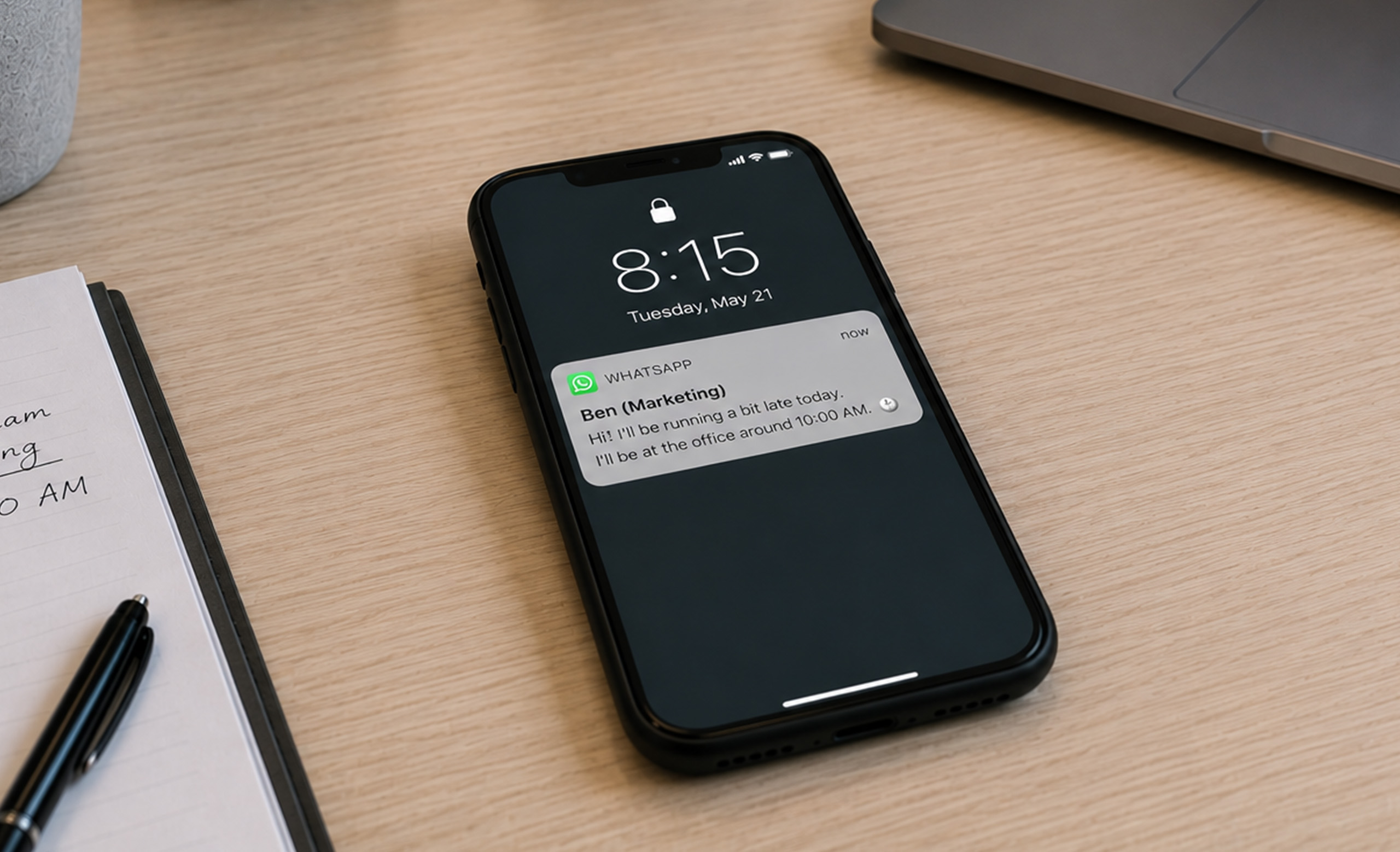
An unexpected 8am message that a key employee will not be in can quickly affect customers, deadlines and the workload of everyone else. Knowing how to manage absent employees is therefore not simply an HR task. For an SME, it is a business continuity issue that also calls for fairness, discretion and a consistent approach.
Absence is not always a warning sign. People get ill, face caring responsibilities and experience difficult periods outside work. The management challenge is to respond properly to the individual while maintaining an operation that does not depend on one person being available every day.
Set clear absence rules before a problem arises
A workable absence process begins with a short, accessible policy. Employees should know who to contact, by what time, what information is required and when they should provide an update. A call may be appropriate for a customer-facing role or a small team where work must be reassigned quickly. For other roles, a designated phone number or messaging channel can be sufficient.
Keep the initial reporting requirement focused. You need to know that the employee cannot work, the likely duration where known, and any urgent work that needs handing over. You do not need a detailed medical account. Asking for more health information than is necessary can undermine trust and may create data protection concerns.
The policy should also explain how sickness certification, paid leave, emergency dependant leave, planned holiday and unauthorised absence are handled. These categories should not be treated as interchangeable. A parent dealing with a sudden childcare emergency, for example, may need flexibility and clear communication, not a conversation framed as misconduct.
Consistency matters more than complexity. If one manager accepts a text at midday while another insists on a phone call before the working day starts, employees receive mixed messages and managers create avoidable disputes.
How to manage absent employees with proportionate contact
The right level of contact depends on the reason for absence, the likely length and the employee’s circumstances. For a one-day illness, a brief check-in and a practical handover may be all that is needed. For longer-term absence, agree a contact plan early: who will make contact, how often, and whether email, phone or another method is preferred.
Supportive contact is not the same as constant monitoring. A manager can ask how the employee is doing, whether there is an expected review date and whether work arrangements need to be considered for their return. They should avoid repeatedly requesting diagnoses, pressing for a return date that the employee cannot give, or making the employee feel guilty for being unwell.
Document each contact factually. Record the date, agreed actions, absence category and any work-related support discussed. Keep health-related records secure and restrict access to those with a genuine need to know. In the UK and across Europe, health information is particularly sensitive personal data, so informal notes shared in a team chat are not an acceptable substitute for proper records.
Protect the team without normalising overload
When someone is away, the immediate instinct is often to divide their work among the remaining team. That may be workable for a day or two. It becomes risky when an absence lasts longer, especially in a lean business where colleagues already have little spare capacity.
Start by separating essential work from work that can wait. Client commitments, payroll, regulatory deadlines and service-critical tasks take priority. Lower-value meetings, internal projects and non-urgent reporting can be postponed. This is not a failure of productivity. It is sensible capacity management.
Then decide whether cover should come from within the team, a temporary worker, an external provider or the manager. The answer depends on the role and the cost of delay. Covering a sales inbox internally may be straightforward; replacing a qualified finance, technical or regulated role requires more planning and appropriate checks.
Be transparent with the team about operational changes, but protect the absent employee’s privacy. Colleagues may need to know that responsibilities have shifted and whom to contact. They do not need to know medical details or personal circumstances. Clear boundaries prevent gossip and demonstrate that confidentiality applies to everyone.
Use return-to-work conversations to identify patterns and support
A short return-to-work conversation is useful after most sickness absences, including brief ones. It should happen promptly, ideally on the employee’s first day back or soon afterwards. The purpose is to confirm they are fit to return, understand whether any work factors contributed and make sure any necessary adjustments are in place.
The tone matters. “We noticed you have been absent three times this quarter, can we understand whether there is something we should address?” is more productive than “Your attendance is becoming a problem.” Repeated short absences can point to an underlying health condition, workplace stress, caring pressure or a poorly designed rota. They can also indicate conduct issues, but that conclusion should not be assumed at the outset.
Keep accurate absence records so that decisions are based on evidence rather than memory. Look for frequency, duration, timing and stated causes, while remaining alert to context. A pattern of Mondays off may require a conversation. Equally, an employee attending multiple hospital appointments or coping with a chronic condition may need reasonable adjustments rather than an attendance warning.
Where disability, pregnancy, mental health, menopause, workplace injury or another protected issue may be relevant, seek HR or legal advice before moving to formal action. The rules differ between jurisdictions, but the central principle is widely applicable: an attendance process must not penalise someone for circumstances where the employer has duties to consider support or adjustments.
Separate capability concerns from misconduct
Persistent absence can eventually affect an employee’s ability to perform their role. That is generally a capability issue, particularly where illness is involved. Unauthorised absence, failure to follow the reporting process without a reasonable explanation, or dishonesty about absence may instead raise conduct concerns.
The distinction affects the process, evidence and tone of the conversation. Treating genuine illness as misconduct is damaging and can expose the business to legal risk. Treating repeated no-shows as purely a wellbeing issue can be unfair to colleagues and leave managers unable to enforce basic standards.
Before formal action, check the facts. Has the employee received the policy? Were expectations clear? Have comparable cases been handled consistently? Is there medical evidence to consider? Has the business explored temporary changes such as altered hours, home working, a phased return or reallocated duties?
If a formal attendance or disciplinary process is necessary, explain the concern, give the employee a proper opportunity to respond and keep a written record of the decision. Avoid setting arbitrary absence thresholds as an automatic route to warnings or dismissal. Trigger points are useful prompts for review, not substitutes for judgement.
Build resilience into everyday operations
The best absence management is partly designed long before anyone calls in sick. Map tasks that only one person can perform, then reduce those single points of failure. Cross-training, documented procedures, shared inboxes and clear file ownership make a business less vulnerable to a single absence.
For small firms, this can feel like time taken away from billable work. Yet documenting a monthly close process or teaching a colleague how to manage a key client account is usually far cheaper than an emergency scramble when the only person who knows the process is unavailable.
Managers should also look at the causes they can influence. Unrealistic workloads, poor line management, unresolved conflict and an always-on culture can all contribute to absence and presenteeism. Employees who work while unwell may appear committed in the short term, but errors, burnout and longer absences often follow.
A practical approach combines firm standards with human judgement. Make reporting easy, respond with respect, maintain reliable records and address recurring concerns early. That gives employees confidence that they will be treated fairly, while giving the business the information and structure needed to keep moving when plans change.