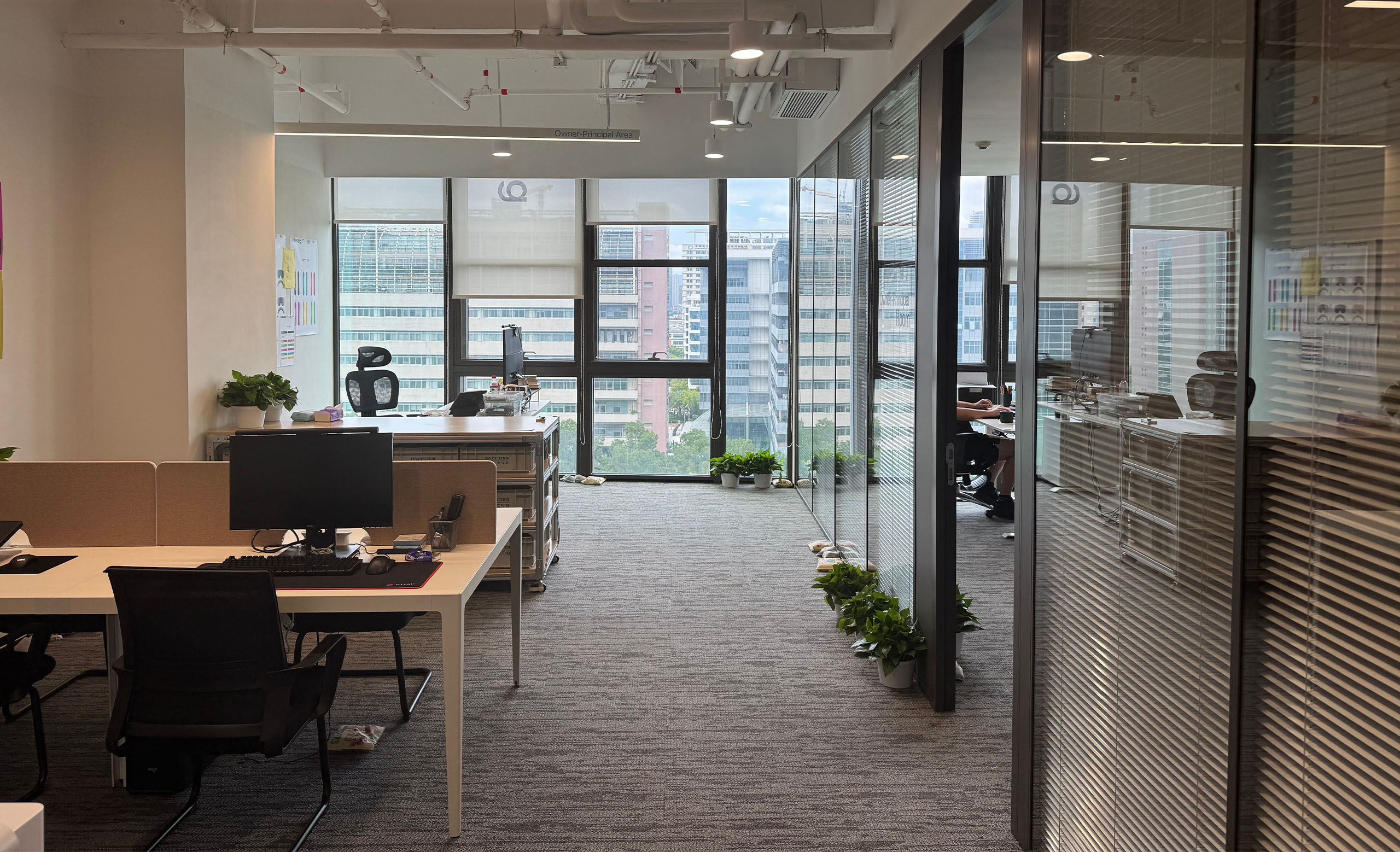
Ask a finance director how far ahead their business plans, and the honest answer is increasingly “about six months”. Ask how long their office lease runs, and the answer is closer to six years. That gap sits at the heart of a new report from Savills, and it explains why so many companies are rethinking how they sign for space.
The Savills 2026 Occupier Strategy Survey, published on 16 November, polled corporate real estate teams across its global network. The headline finding is clear: 81% of respondents are actively seeking more flexible lease terms. More than half are postponing capital spending on their offices, and 28% plan to increase the share of flexible workspace in their portfolios. In short, occupiers still want good offices. They just no longer want to be locked into them.
The mismatch at the heart of the office market
The numbers behind the trend are striking. According to Savills, the average remaining lease term for prime offices stood at 6.3 years in the third quarter of 2026. Meanwhile, research by planning software company Pigment found that 54% of businesses work with financial planning horizons of six months or less. Only 6% plan more than five years ahead.
Savills is careful to say this is not short-termism. It reflects a world in which AI, trade tensions and geopolitical risk make long-range forecasts unreliable. A separate October survey by insurer Beazley found that 90% of executives expect geopolitical and economic uncertainty to limit their growth plans, up from 78% in January. When your strategy can change twice a year, a rigid ten-year commitment becomes a real business risk rather than a simple overhead.
Cost pressure adds to the tension. Rising real estate costs ranked as the number one challenge for corporate real estate teams in the survey, ahead of global uncertainty and regulatory complexity. That matches Savills’ separate cost tracking, which shows prime office occupier costs up 4.7% year on year across 47 global cities.
Optionality becomes the new negotiating currency
So what does “more flexible” actually look like in a lease? Savills highlights several tools that are moving from nice-to-have to standard asks:
- Rolling break clauses: which let a tenant leave before the contract formally ends.
- Expansion and contraction rights: so the footprint can grow or shrink as headcount changes.
- Renewal options and rights to extra space: giving the tenant more control over the timing of future commitments.
- Phased occupation: where space is taken in stages rather than all at once.
A good example comes from London. Law firm Herbert Smith Freehills Kramer signed a 21-year lease for around 238,000 sq ft at Broadgate. The deal is long, but it includes options to reduce the space by roughly 11% or increase it by 34%. That is the new model in miniature: a long-term base with built-in room to move.
The trend is strongest in Europe, where landlords are more willing to offer flexible terms to attract and keep high-quality tenants. Legal and technology firms are the most likely to push for these options.
Capex on hold, and decisions take longer
The second shift is about money and time. 54% of respondents say they are delaying capital expenditure, as the cost of fitting out a prime office rose 6% in the twelve months to Q3 2026. Where fit-outs do go ahead, companies are asking for adaptable layouts, such as movable partitions and spaces that can switch between focus work, collaboration and events.
Decision-making has slowed too. In the UK, an office deal that took about twelve months from start to signature in 2017 can now take 18 to 24 months. Approvals move higher up the organisation, and legal negotiations get more complex as tenants ask for more options.
That caution has a price. In tight prime markets such as London, Manhattan and Tokyo, the best floors do not wait. Savills advises starting well before a lease event, so there is time to compare buildings, secure internal sign-off and negotiate flexibility without being rushed.
Where flexible workspace fits
For many companies, the simplest way to buy flexibility is to use space that is already built for it. Flexible offices let businesses enter a new city quickly, avoid fit-out bills and scale up or down without renegotiating a lease. Notably, flex is no longer a stopgap. According to Savills’ Workthere Flexmark 2026 report, corporate occupiers stay in flexible workspace for 3.9 years on average.
Landlords are responding by mixing traditional leases, managed offices and flexible space in the same building or campus. For occupiers, that means one relationship can cover a stable core and a flexible edge.
What this means for your business
You do not need a corporate real estate team to apply these lessons. Whether you are a scale-up or a five-person firm, a few questions help before you commit to any office:
- How far ahead can you realistically forecast your headcount?
- Can you get a break clause or the right to give back part of the space?
- Who pays for the fit-out, and what happens to it if you leave early?
- Could part of your need be met with flexible desks, meeting rooms on demand or a virtual office address?
The message from the Savills survey is simple: in an uncertain market, the most valuable feature of an office is no longer just its location or design. It is how easily you can change your mind.