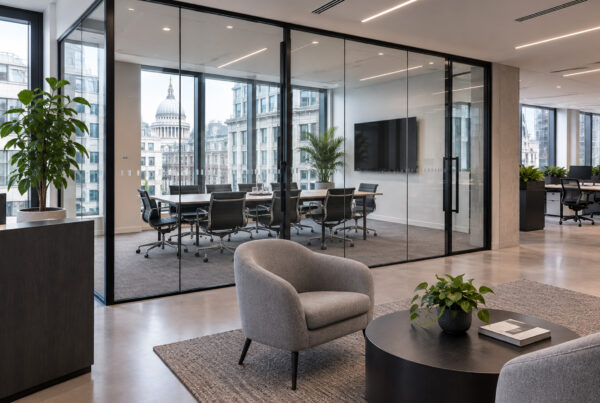
For several years, “office development” and “fresh equity” rarely appeared in the same sentence. Investors were nervous about hybrid work, valuations were sliding, and building new offices looked like a bet against the trend. So when Ireland’s sovereign wealth fund commits €100 million to a new Dublin office block, it is worth asking why.
The developer is IPUT Real Estate, Dublin’s largest office investor. The ISIF investment, announced on 2 November, will fund 29 Earlsfort Terrace, the first project in a €500 million development pipeline. With it, IPUT says it has raised more than €400 million in new equity this year, alongside €300 million in new credit facilities from ABN AMRO, Bank of Ireland and ING.
That is a lot of capital for offices in 2026. Part of the explanation lies in a brand most people outside Dublin have never heard of: Studio.
What IPUT is actually building
IPUT owns a €2.7 billion portfolio of 30 office buildings, all in Dublin city centre, totalling more than 186,000 m². It is a classic landlord: long leases, blue-chip tenants, prime locations.
The new pipeline is about 32,500 m² across two consented city-centre sites, Earlsfort Terrace and Harcourt Street. Having planning permission in hand matters. In a supply-constrained market, ready-to-build sites are scarce, and that scarcity is part of what investors are paying for. IPUT has appointed a main contractor for Earlsfort Terrace and expects to be on site before the end of the year.
Studio: the landlord’s own flex brand
Alongside its traditional leases, IPUT runs Studio, a flexible leasing platform it launched in 2022 under the name Making it Work. Studio offers furnished, managed suites inside IPUT buildings. Members and tenants also get access to shared amenities across the portfolio, from meeting rooms and gyms to an auditorium and a podcast studio.
The numbers explain why the brand features so prominently in IPUT’s investor story. By mid-2025, all nine Studio spaces were fully occupied. IPUT’s chief executive, Niall Gaffney, described occupancy as high and payback as quick. The plan now is to grow Studio to around 18,600 m² across 18 locations by the end of 2026, a fraction of the total portfolio but one IPUT says is achieving record rents.
That is the key point. Studio is not a side project. It is a small, high-yielding layer on top of a large conventional portfolio. It earns more per square metre, fills quickly, and makes the whole portfolio more attractive to occupiers who want amenities and flexibility.
Why this matters beyond Dublin
IPUT is not unique in launching its own flex brand. Landlords across Europe have done the same, often to fill hard-to-let floors. What stands out here is the order of events: the flex platform comes first and helps make the case for raising capital, not the other way around.
Three lessons stand out for landlords and operators elsewhere, including the Netherlands.
- Flex can be a value driver, not a vacancy fix. IPUT puts Studio in its best buildings, not its weakest. That positions flex as a premium product rather than a discount.
- Amenities are shared across the portfolio. Instead of building a gym in every building, IPUT spreads facilities across locations and opens them to all occupiers. A conventional tenant in one building benefits from amenities in another. That raises the value of the whole portfolio, not just the flex floors.
- Capital follows quality and scarcity. Investors are not backing “offices” as a category. They are backing prime, consented, well-located space in a market with too little of it. The Dutch office market looks similar: a shortage of top-quality space alongside persistent vacancy in older stock.
For independent flex operators, there is a flip side. As landlords with deep pockets build their own platforms, the competition for prime buildings and good locations gets tougher. Partnership models, where an operator runs flex space on behalf of a landlord, may become more attractive than going it alone.
Flex has moved into the boardroom
The IPUT story shows how far flexible workspace has come. Ten years ago, a landlord running coworking floors would have been seen as a distraction. Today, a landlord-run flex brand is part of the pitch that brings sovereign money and international banks to the table.
The lesson is not that every landlord should launch a flex brand. It is that flexibility, amenities and quality now sit at the centre of how offices are valued, by occupiers and by the investors who fund them.