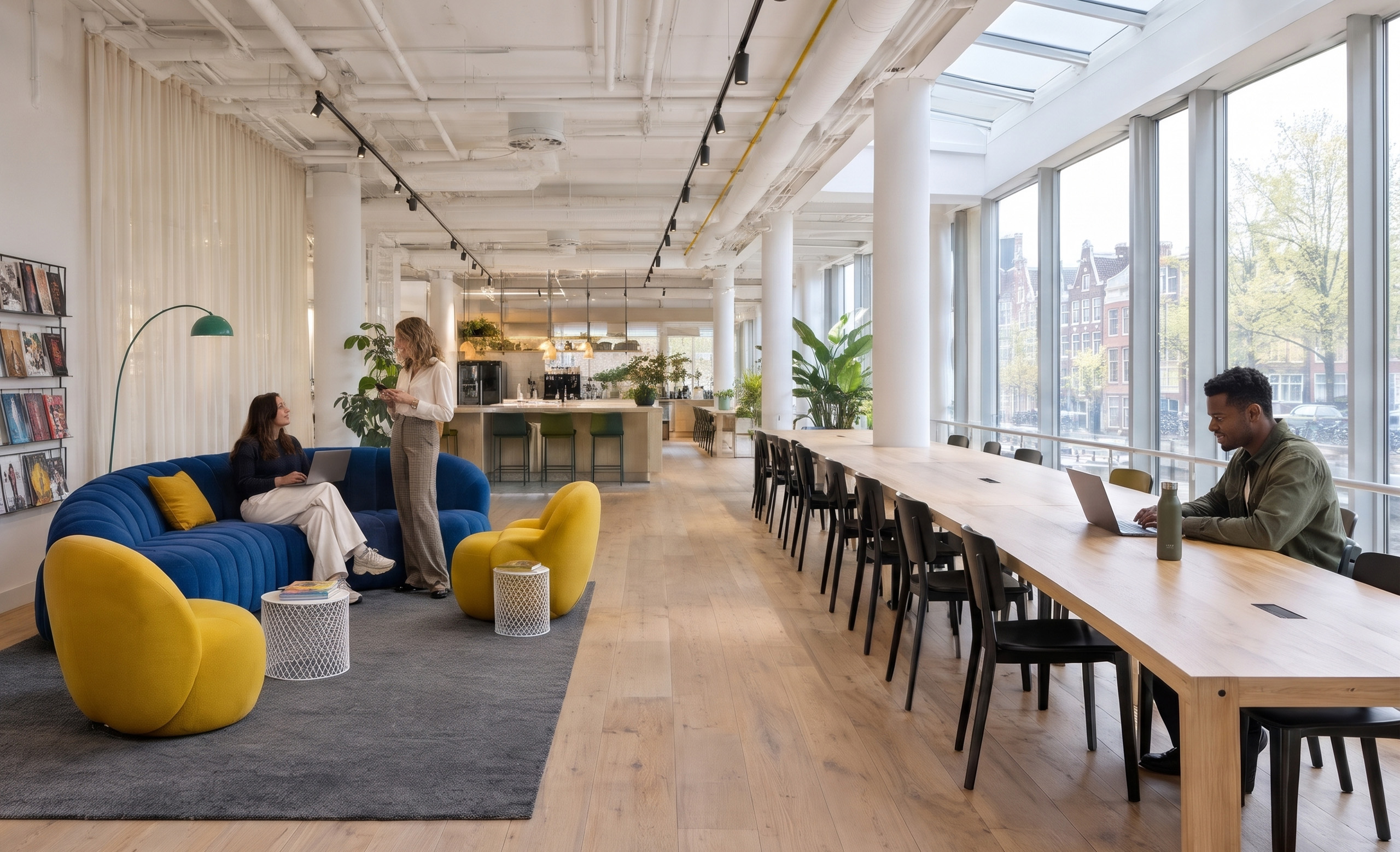
For three years, Booking.com politely asked its people to come into the office. This week, a judge in Amsterdam said it may now insist. On Wednesday, the court ruled that it is not unreasonable for the travel platform to require its roughly 7,000 Netherlands-based employees to spend at least 40% of their working time at the office. For a full-time employee, that means two days a week.
The ruling closes a dispute that had been simmering since the pandemic. Many large employers are trying to turn office “recommendations” into firm rules, and this case shows how that can be done under Dutch law.
Three years of asking nicely
Booking.com introduced its 40% guideline back in 2022, as lockdowns ended. In practice, the guideline was easy to ignore. Only 27% of employees currently meet the threshold, and some still work almost entirely from home.
When the company decided to make the policy mandatory, it ran into a uniquely Dutch obstacle: the works council. Under the Works Councils Act (WOR), changes to where and how people work generally need the council’s consent. Booking.com’s council refused. The company then took the route the law provides, asking the court to grant replacement consent on the grounds that the refusal was unreasonable.
The court agreed. It weighed Booking.com’s managerial discretion and its right to give reasonable workplace instructions. It also accepted the argument that time together in the office supports collaboration, knowledge sharing and innovation.
The company’s spokesperson described the move as a refinement of existing policy rather than a fundamental shift. The works council said it regretted that management went to court instead of continuing the dialogue, and it is now studying whether to appeal.
Why your company can’t simply copy this
It is tempting to read this as a green light for any Dutch company that wants its people back at their desks. That would be a mistake. Legal commentators note that the outcome depends heavily on the specific situation and on the arguments the employer brings.
What made Booking.com’s case strong was its moderation. The company originally floated a 50–60% attendance requirement and scaled it back. The final policy includes a six-month transition period and a hardship clause for employees facing genuine difficulties. The company had also spent years treating 40% as the norm before making it binding.
Compare that with Airbus. Earlier this year, Airbus had to soften a four-day office mandate after worker strikes (read our earlier coverage). The lesson is consistent across both cases. Attendance policies that are proportionate, well-argued and come with safeguards tend to hold up. Maximalist mandates tend to provoke resistance, whether in the courtroom or on the shop floor.
Courts can approve a policy, but they cannot make people embrace it. The 27% figure is a reminder that the gap between policy and practice is ultimately a cultural challenge. Managers will still need to make office days worth the commute.
The small print: a desk for everyone
Buried in the ruling is a condition that matters for anyone who manages workspace. The court said Booking.com must keep providing enough workstations, so that every employee who comes in has a place to sit.
For Booking.com itself, that is unlikely to be a problem. Its 65,000 m² City Campus on Amsterdam’s Oosterdokseiland opened in 2023 to bring all Amsterdam staff under one roof. The company sold the building to Deka Immobilien for around €566 million in a sale-and-leaseback deal.
For many other organisations, the picture is different. Plenty of companies have shrunk their footprint since 2020, sizing it to average occupancy rather than peak days. If an attendance requirement comes with an implicit “guaranteed desk” condition, those companies may suddenly find Tuesdays and Thursdays very crowded.
That is where hybrid workplace strategy becomes concrete. There are several ways to absorb the peaks:
- spreading team days across the week
- introducing desk booking
- adding a few satellite locations closer to where people live
- keeping flexible office space or meeting rooms on call as overflow capacity
The new playbook for hybrid policy
For employers considering a formal office attendance policy, the Booking.com case offers a practical template. Document the business reasons clearly, and involve the works council early rather than presenting a finished plan. Keep the requirement moderate, and build in a transition period and a hardship arrangement. Finally, make sure there is enough space for everyone who is asked to show up.
For works councils, the message is that outright refusal of a moderate hybrid policy may not survive scrutiny. Negotiating the conditions may be the stronger position: transition time, exceptions, and the quality of the workplace itself.
For the wider office market, the ruling confirms something many already sensed. The Dutch standard is settling on structured hybrid working, not a full return to the office. Demand will favour well-located, high-quality space that people actually want to visit, supported by flexible capacity for the busy days.
Two days in, but the debate isn’t out
Booking.com’s win does not end the debate about working from home in the Netherlands, especially with an appeal still possible. It does show that a modest, carefully built office attendance policy can withstand legal challenge. It also shows that a desk for everyone is part of the deal. Employers who want people back two days a week should check their space as carefully as their policy.