Not so long ago, San Francisco was the go-to example of everything that could go wrong in the post-pandemic office market. It had empty towers, record vacancy and landlords handing keys back to lenders. In 2026 the story reads very differently. A wave of AI and technology companies has put the city on track for one of its strongest office leasing years in decades. The type of space these tenants want says a lot about where the office market is heading, on both sides of the Atlantic.
From cautionary tale to comeback: 12.1 million square feet and counting
According to Savills’ latest San Francisco office market report, the city recorded 3.9 million square feet (roughly 362,000 m²) of leasing in the third quarter of 2026. That is around 77% more than the 2.2 million square feet signed in the same quarter last year. Q3 came in slightly below the exceptional 4.4 million square feet logged in Q2, but the bigger picture is what counts. Year-to-date leasing has reached 12.1 million square feet (about 1.1 million m²), compared with 8.1 million square feet over the first three quarters of 2025.
Rents are following demand. Average asking rents climbed to $70.31 per square foot in Q3, up 5.1% year on year, and Class A space now asks $76.13. Overall availability has dropped to 27.2%, lower than a year ago.
The pipeline also looks healthy. More occupiers are actively searching for 100,000 square feet or more. If those searches turn into signed leases, sizeable blocks of space will come off the market, further eating into the city’s excess inventory.
Day one or no deal: why AI tenants won’t wait for a fit-out
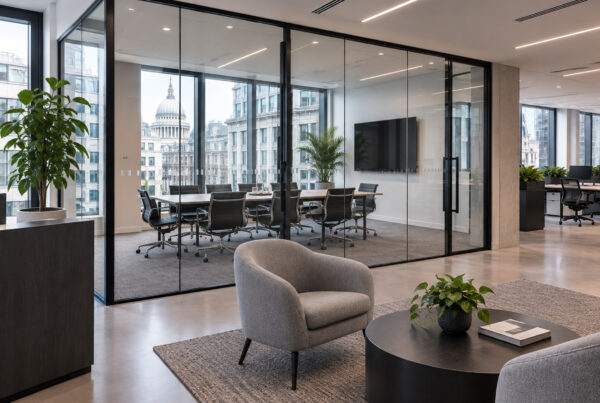
The most telling detail in the report isn’t the volume. It’s the kind of space being leased. Fast-growing companies, many of them in AI, are prioritising speed to occupancy. They want furnished, move-in-ready offices that can absorb the next round of hires without a twelve-month fit-out.
That makes sense once you look at how these businesses grow. An AI start-up that closes a funding round can double its headcount within months, and it has no time to wait for architects, contractors and permits. Savills has described AI firms maturing from opportunistic office users into more institutional tenants. The urgency hasn’t gone away, though. These companies are making long-term commitments to the city, but they still expect to be up and running almost immediately.
For the flexible workspace sector, this will sound familiar. Plug-and-play suites, managed offices and fully fitted floors are exactly what flex operators and forward-thinking landlords have been building for years. San Francisco shows what happens when a fast-growing sector meets that offer at scale: the ready-to-go stock gets snapped up first.
Empty towers, rising rents: the paradox of a split market
There’s a paradox here. More than a quarter of San Francisco’s office stock is still available, yet rents are rising.
Both can be true because the market has split in two. Tenants are competing hard for a relatively small pool of high-quality, ready-to-use space, while older, unrenovated buildings continue to sit empty. A single availability figure hides that divide. For landlords, the lesson is blunt: the gap between “available” and “lettable” is often a fit-out budget and a flexible lease term.
It’s also worth keeping the AI story in perspective. The technology filling San Francisco’s towers is also prompting job cuts elsewhere, and several large companies have announced AI-driven restructurings in recent weeks. A market that leans this heavily on one sector carries concentration risk. If AI funding cools, demand for those large 100,000-square-foot requirements could cool with it.
From Mission Bay to the Zuidas: lessons for European offices
San Francisco is a unique market, but its underlying dynamics travel well. In the Netherlands, occupiers have been choosing less space of higher quality for some time. Demand for sustainable, well-located and well-equipped offices keeps outpacing supply. Amsterdam is also building its own AI ecosystem, with dedicated start-up hubs opening thousands of square metres for young tech companies.
For European operators and landlords, three lessons stand out.
First, readiness is a product in its own right. Furnished, fully serviced space commands a premium because it saves tenants time, and time is what growth companies value most.
Second, lease flexibility matters as much as the floor plan. Fast-scaling tenants want room to expand, or to shrink, without renegotiating everything from scratch.
Third, headline vacancy rates don’t tell the whole story. Well-specified, move-in-ready space can be scarce even in a market that looks oversupplied on paper.
Walk in, plug in, start working
San Francisco’s recovery isn’t a return to 2019. Demand is now concentrated in fast-moving tech and AI firms that value speed, flexibility and quality above everything else. For anyone working in the office or flex market, that is a signal worth noting. The buildings that win are the ones that let a tenant walk in and start working on day one.